
Extremism at American Universities

How would you feel if some number of faculty members at American universities were Nazis? Is there a certain threshold where the Nazi presence would be alarming? A certain threshold that would warrant a response? Hold onto those thoughts because while there are a lot of extremists at the universities, they might not be the types we are normally conditioned to be wary of. Rather than speculating, we will try to quantify how much extremism is present.
We can start things off by looking at this table from a study on the politics of American university faculty:
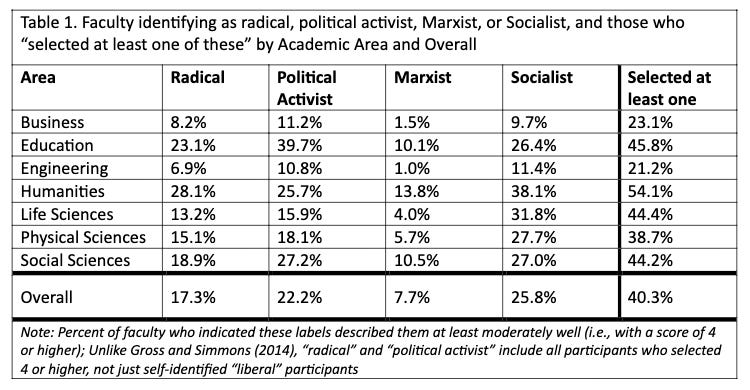
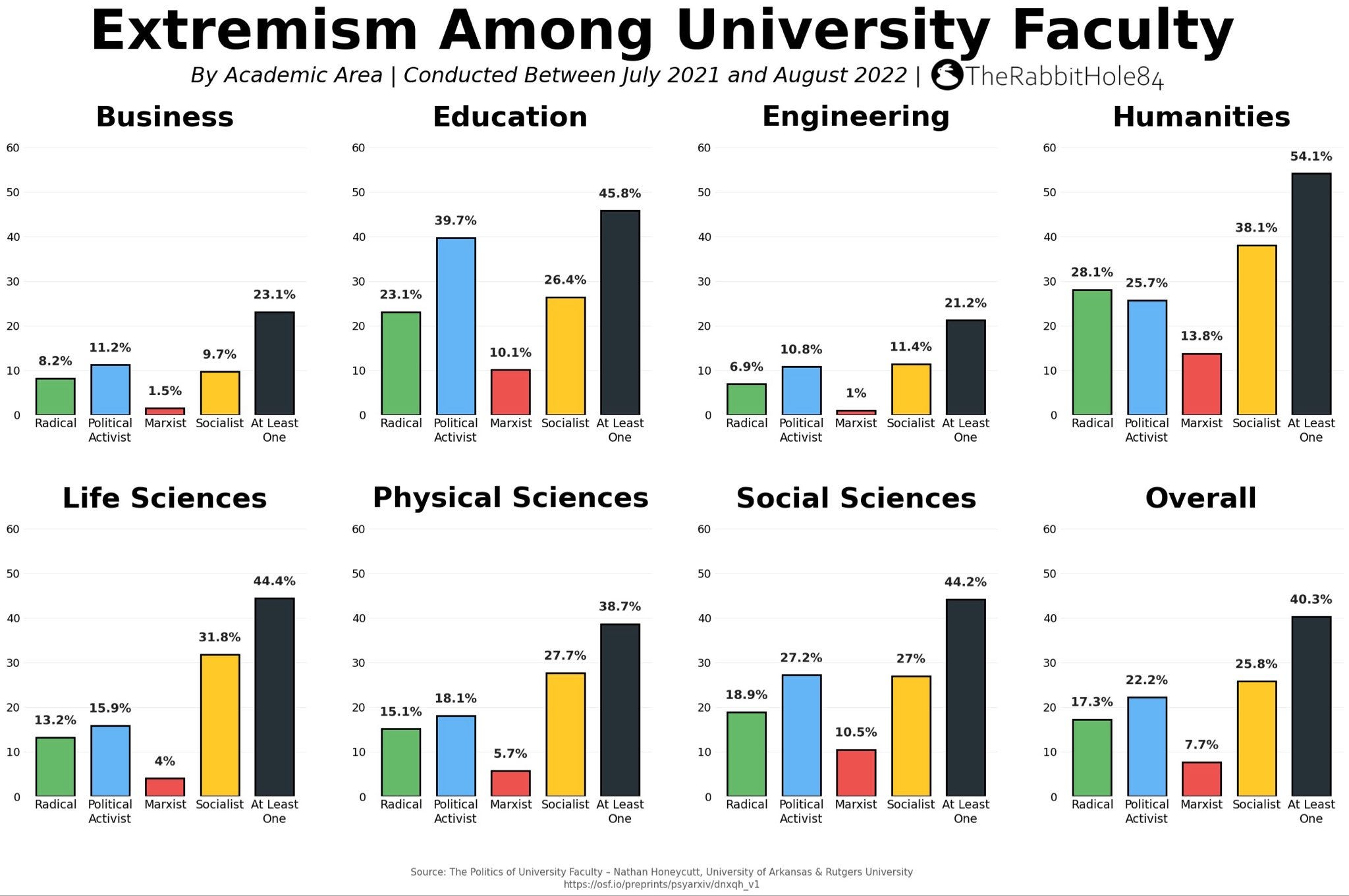
Take a moment to read through the numbers and consider whether extremism is an issue here. I went ahead and visualized the data from the table:
Let’s zoom in on the share of Marxist faculty at American Universities:
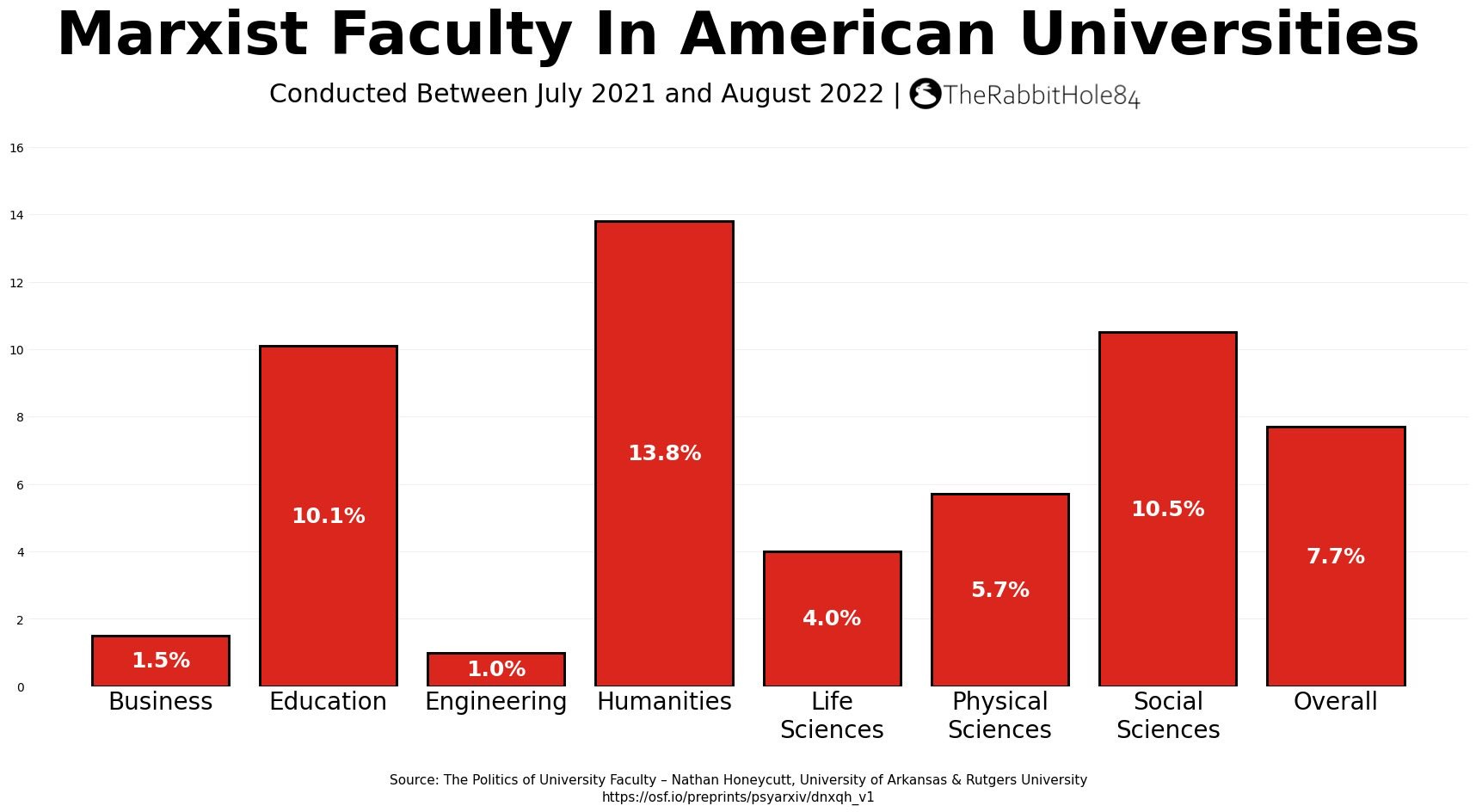
The Humanities (13.8%) and Social Sciences (10.5%) have the highest shares of Marxists, whereas Engineering (1%) and Business (1.5%) have the lowest.
The share of Socialists is even higher:
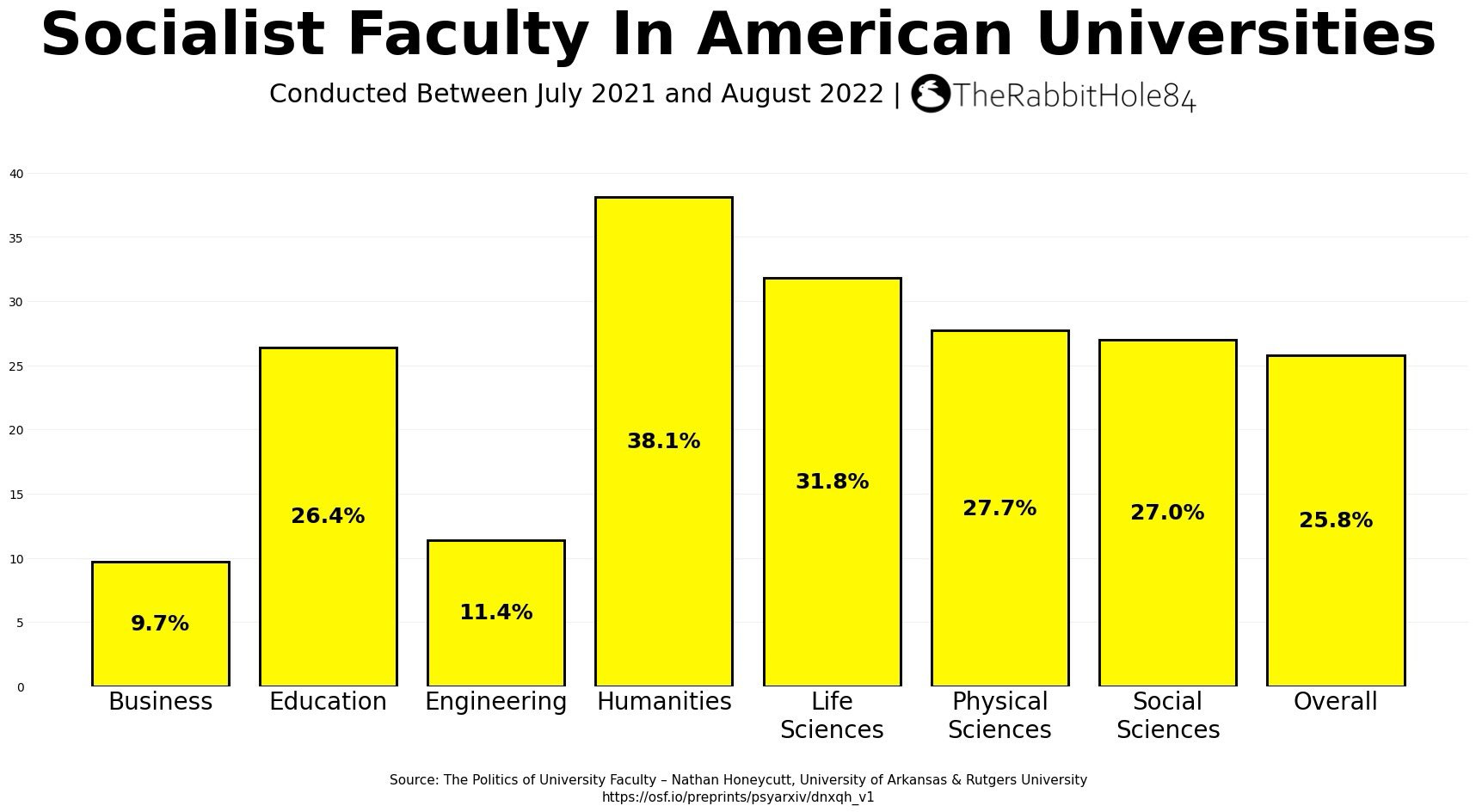
25.8% of American Univeristy faculty identify as Socialists. Humanities (38.1%) and Life Sciences (31.8%) have the highest share of Socialists, while Business (9.7%) and Engineering (11.4%) have the least.
Ever wonder why universities seem to have a lot of protests and activism going on? This might be one factor:
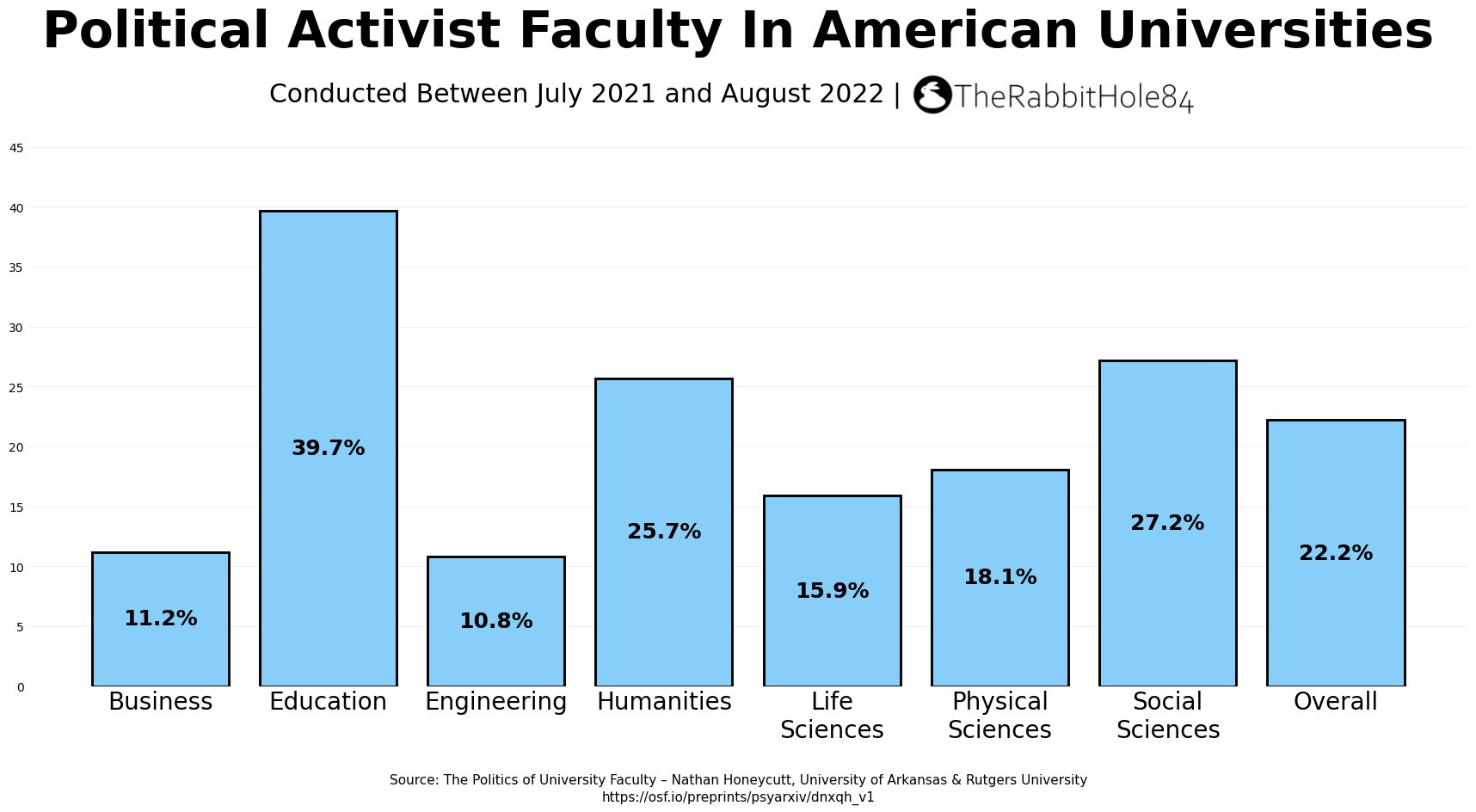
Education has the largest share (39.7%) of faculty who identify as Political Activists among academic areas. The Social Sciences have the next largest share (27.2%), with Business (11.2%) and Engineering (10.8%) being the least impacted.
Have you ever thought that universities have some strange ideas? It might be because many faculty members are Radicals:
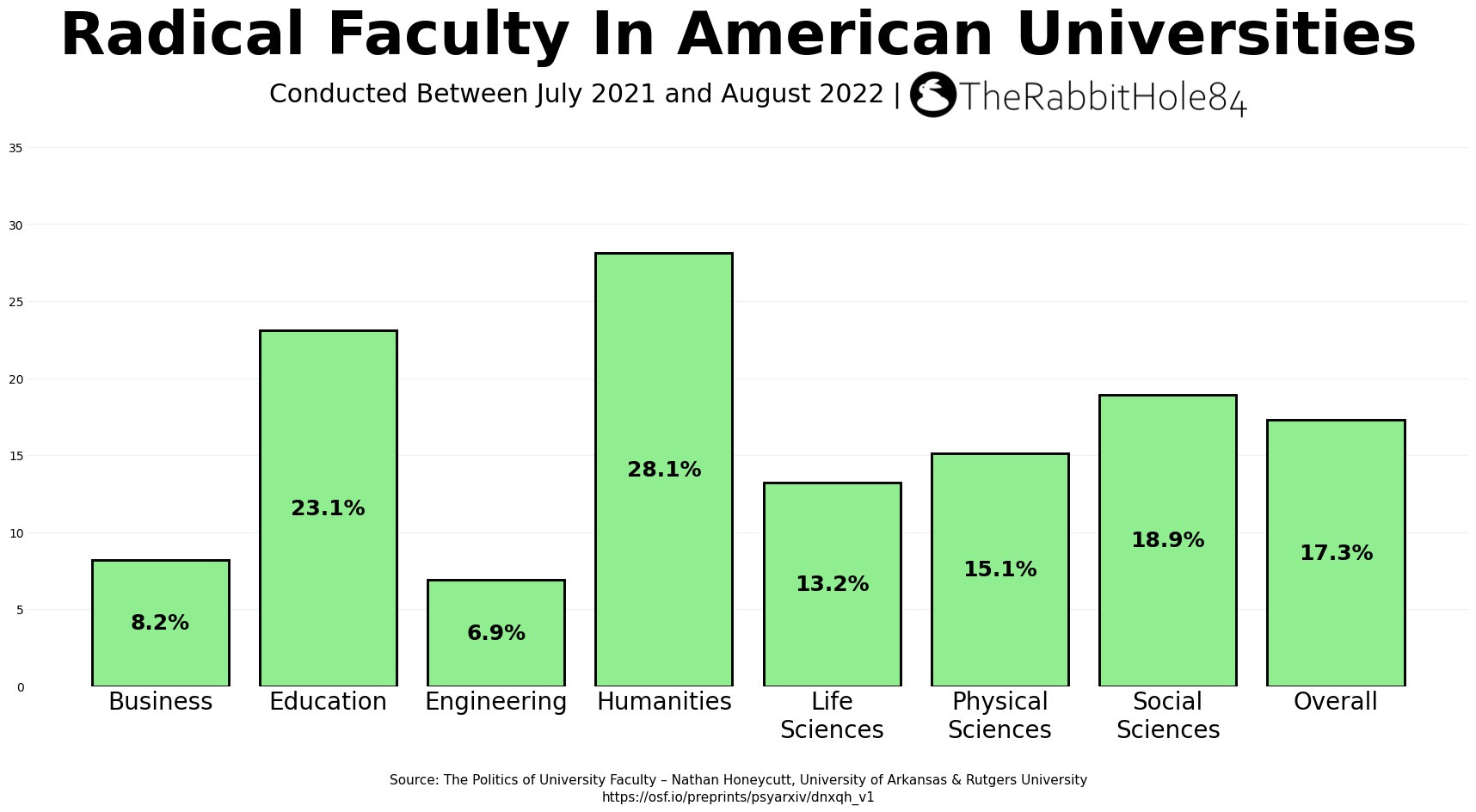
About 17.3% of university faculty identify as Radical with the Humanities (28.1%) and Education (23.1%) being the most impacted, while Business (8.2%) and Engineering (6.9%) are the least impacted.
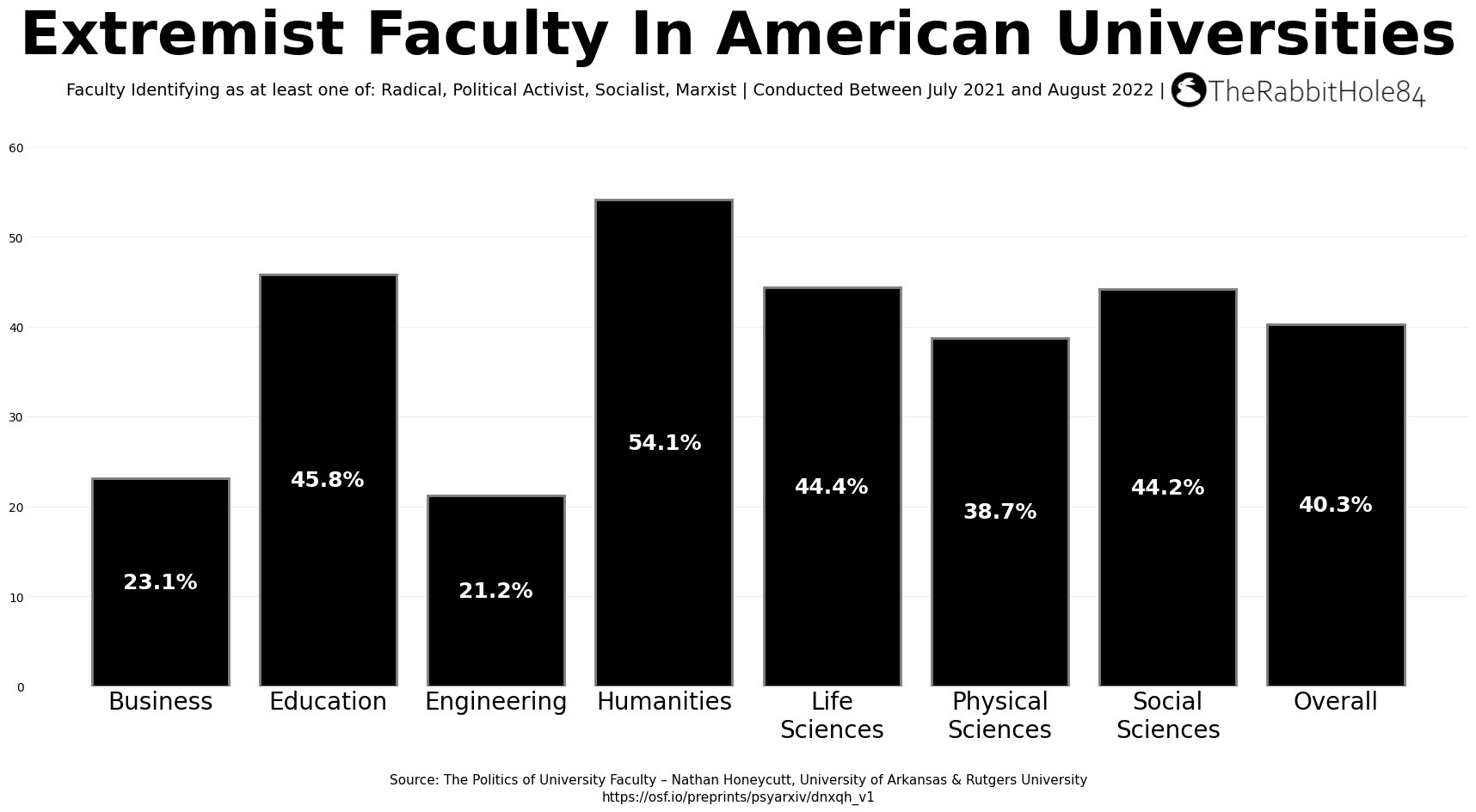
Overall, 40.3% of university faculty identify as at least one of the following:
Radical
Political Activist
Socialist
Marxist
If you have ever wondered why so many educators seem politically motivated, then this might, at least in part, explain it. The Humanities (54.1%) are most affected, followed by Education (45.8%), Life Sciences (44.4%), and Social Sciences (44.2%). Business and Engineering are the least impacted. At a minimum, this data lends some credence to the argument that universities have become hotbeds of radical Left-wing ideology. It’s hard to argue otherwise when a majority of the Humanities faculty identify with some form of Left-wing extremism, and most other departments have between 21.2% and 45.8% of their faculty holding extremist viewpoints.
While some of these ideas might sound nice in theory and in the classroom, they tend to play out badly in the real world. Between just those identifying as Marxists (7.7%) and Socialists (25.8%), that is a lot of University Faculty aligning themselves with some of the ideologies associated with events that can be ranked among the most disastrous of the 20th Century:
Between 1930 & 1953, 1.5 to 1.7 million people are estimated to have died in the Soviet Union's Gulags.
The Great Leap Forward resulted in the deaths of 30 - 45 million Chinese citizens
During the Cambodian Genocide, 1.5 to 2 million people perished
The above are only a few examples of the lives lost in pursuit of Marxist Utopia.
Let us now revisit the question posed at the beginning of this article: How would you feel if there were a significant Nazi presence at American universities? Now ask yourself whether those feelings still apply, given the significant Marxist presence. If they don’t, then they should when considering how much bloodshed Marxism has found itself entangled in.